Posted by Jeff Smith on | Comments Off on Most Common Plating Problems: Why They Occur and How to Solve Them
When precision plating matters, even minor issues can cascade into significant performance failures and costly rework. After decades of serving aerospace, automotive, medical, and electronics manufacturers, we’ve seen recurring plating challenges that disrupt production schedules and compromise component reliability. Understanding these problems and their root causes is essential for engineers specifying plating requirements and manufacturers selecting the right plating partner.
Posted by Jeff Smith on | Comments Off on Specifying the Right Plating for Telecom Connectors: Gold vs. Silver vs. Nickel vs. Tri-M3™ and HPEN
Connector plating can make or break network performance over the years of service. Every plating decision is a balancing act between conductivity, corrosion resistance, magnetic properties, and wear life, all of which impact uptime, signal clarity, and maintenance cycles.
Posted by Jeff Smith on | Comments Off on Electroplating for Longevity and Performance: How Engineered Finishes Extend Component Life
In safety-critical industries like aerospace, medical, and telecommunications, engineers have to consider factors beyond base material and design for dependable component performance. For example, the right plating finish can make the difference between years of flawless service and early failure.
Posted by Jeff Smith on | Comments Off on Antimicrobial Metal Coatings: How Steriplate® Outperforms Conventional Alternatives
Surfaces are the silent enablers of contamination. From surgical clamps to food-grade valves, the materials we trust in sterile environments often fall short under microbial pressure. Pathogens colonize quickly, traditional coatings degrade, and sterilization protocols can only go so far.
Posted by Jeff Smith on | Comments Off on How Plating Impacts Connector Performance at High Frequencies
As electronic systems become smaller, faster, and even more heavily relied upon, high-frequency performance has become a critical design requirement—especially in telecommunications, aerospace, and medical devices. RF connectors, in particular, must maintain signal integrity under increasingly demanding conditions.
Posted by Jeff Smith on | Comments Off on X-Ray Fluorescence (XRF)
X-Ray Fluorescence (XRF) is a fast, convenient, and non-destructive method used for material analysis, elemental composition, and plating thickness testing for all types of materials. This measurement method is recognized in several industry standards including the B568-98 ASTM standard. XRF requires no use of chemicals and sample preparation is not necessary. XRF provides an accurate thickness measurement in as little as 15 seconds. This happens by measuring the fluorescent (secondary) X-Ray emitted from a sample after it has been excited by a primary X-Ray source. Since all of the elements present on the sample have special characteristics that are unique, this allows the XRF to be able to identify each element and makes it an excellent source for qualitative and quantitative analysis of material composition and thickness.
Posted by Jeff Smith on | Comments Off on Intro to Volume II of The Electro-Spec Blogs!
Electro-Spec. Inc. is proud to announce Volume II of technical blogs which will cover several of its most valuable testing and inspection capabilities to meet a broad range of industry standards and customer requirements. This volume will highlight five different types of testing that allow Electro-Spec to distinguish itself as a world class electroplating facility. Each testing method will be fully explained which should allow customers (present and future) to better understand the results of the various tests. Electro-Spec will always place meeting or exceeding plating requirements via test methods as a main priority and thus resulting in the highest quality surface finish possible.
Posted by Jeff Smith on | Comments Off on Electroplating for the Medical Industry: What Type of Surface Finish to Choose and Why
Electro-Spec Inc. is more than capable of handling all of your precious metal plating and passivation needs for the medical industry including medical devices, instrumentation, and electrical connectors. With state-of-the art equipment, processes and technology, Electro-Spec will provide quality which is unparalleled by any other plating facility. We have the ability to meet the most stringent specifications in the medical industry, with indefinite traceability for all processes that we do. The most common metals utilized to plate medical components are gold and silver; these are metals which Electro-Spec has the capabilities of using. In addition, Electro-Spec provides passivation services which have been proven to allow medical instrumentation to have a more sterile surface.
Posted by Jeff Smith on | Comments Off on Enhancing your Product with Heat Treating and Annealing
Products intended for more demanding applications can often miss their mark. Even if the design meets the proper dimensional or material requirements, there is no guarantee that the part or component will perform optimally.
Posted by Jeff Smith on | Comments Off on The Evolution of Electroplating
Thanks to its unique advantages over other plating processes, electroplating is used in a number of different applications today. Electroplating is a process in which a layer of metal is applied to the surface of another to create an attractive or protective coating. It was discovered in 1805 by Italian chemist and professor Luigi Brugnatelli who, like many great inventors, stumbled upon the process accidentally.


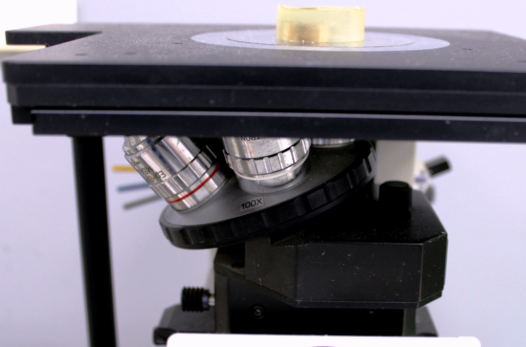 Each testing method will be fully explained which should allow customers (present and future) to better understand the results of the various tests. Electro-Spec will always place meeting or exceeding plating requirements via test methods as a main priority and thus resulting in the highest quality surface finish possible.