

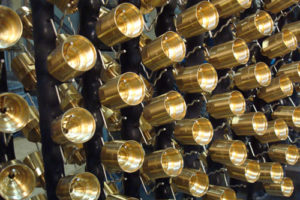
Find electroplating services for aerospace, medical, telecommunications, automotive, nuclear, and battery components at Electro-Spec’s two facilities in Franklin, Indiana, and Lexington, South Carolina. Our technical team works with yours to solve plating problems and optimize coverage, adhesion, and specifications. Request a quote or download our line card to see everything we can do for you!

Request a Quote Download the Capabilities Line Card

Franklin, Indiana
Certifications: NADCAP, AS9100D, ISO 9001:2015, ISO 13485, ISO 14001:2015

Lexington, South Carolina
Certifications: AS9100D, ISO 9001:2015, 10 CFR Part 50 (nuclear)

Our Electroplating Services

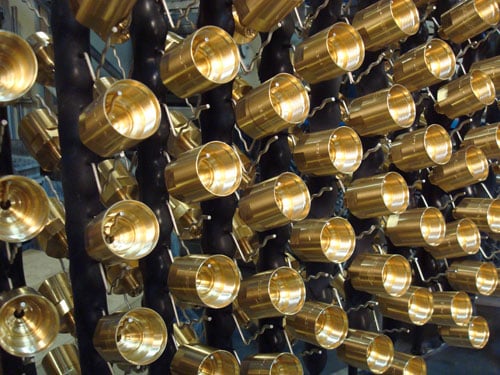
Electroplating services deposit a thin, controlled layer of metal onto a part using electric current. The coating adds corrosion resistance, wear resistance, conductivity, or solderability without changing the base material. Electro-Spec’s industrial electroplating services cover finishes from 5 to 500 µin on parts up to 12 inches wide.

Electroplating and metal finishing services we provide:

  • Finishes: Gold, silver, nickel, electroless nickel, copper, tin, and Tri-M3™ across both facilities (silver in Indiana, tin in South Carolina)
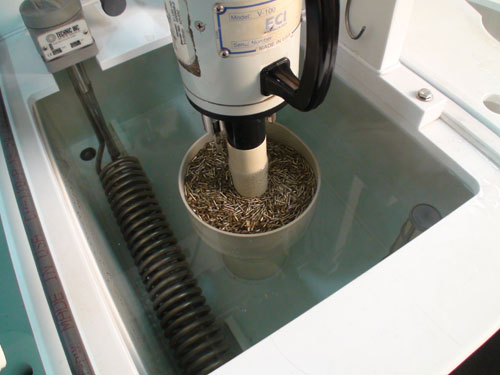
  • Methods: Barrel, rack, wire, vibratory, selective gold, spouted bed electrode, and high-speed rack plating
  • Related metal finishing: Passivation, heat treating and annealing, electropolishing, and precision cleaning
  • Protection: Electroplated parts that resist corrosion, abrasion, chemicals, and heat, plus EMI/RFI shielding
  • Volume: Prototype quantities through large production runs

Why Engineers Choose Electro-Spec as Their Electroplating Company

Electro-Spec is a value-added partner built for critical parts. We work with your engineering and quality teams to solve plating problems at the source.

Technical Problem Solving

We regularly take on parts other suppliers struggled to plate. Our team works through coverage, adhesion, and specification issues with your technical team.

Process Data and Traceability

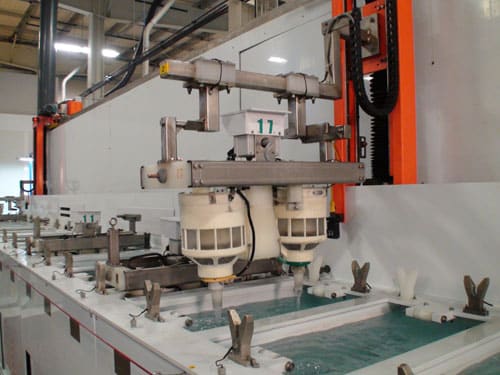
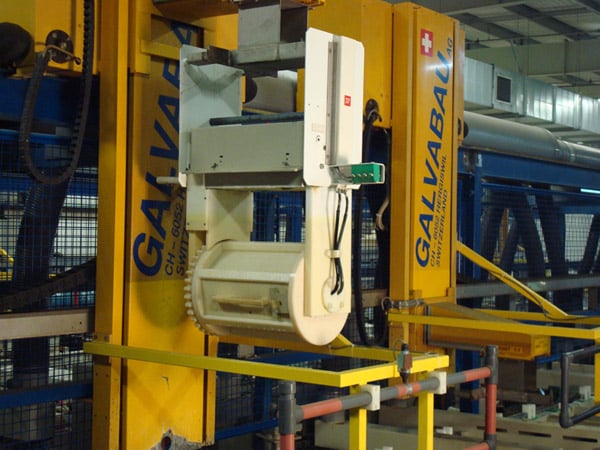
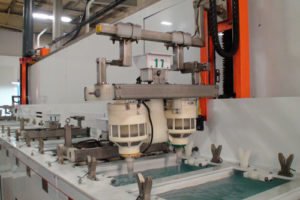
Our PLC-controlled automated lines capture process data. Archived job records let us review how a part was processed years later.

In-House Root Cause Analysis

Scanning electron microscopy and X-ray analysis at both facilities help us find the root cause of corrosion, wear, and field failures.

Real-Time Order Visibility

The Customer Portal shows order status and lets you expedite. Download certificates of conformance and packing lists for each order.


Pre-Plating Services for Metal Components

Clean, properly prepared parts are critical for adhesion and consistent coverage. Developed pre-plating operations include vacuum vapor degreasing and special cleaning. We also review incoming parts for scale, contamination, and surface condition before plating begins.

Pre-Plating and Preparation Methods We Use

  • Vacuum vapor degreasing: Cleans deep counterbores and recesses before plating
  • Special cleaning and bright dip: Performed to your specification or as a best practice for your substrate and geometry
  • Heat treating and annealing: Done in a nitrogen environment, with degreasing beforehand to minimize heat scale
  • Electropolishing: Deburr, smooth, and brighten 304 and 316 stainless steel, copper, and copper alloys
  • Incoming inspection: Visual examination under magnification, cleanliness verification, dimensional checks, and substrate condition assessment

Plating in Indiana and South Carolina

Electro-Spec plates high-reliability parts from Franklin, Indiana and Lexington, South Carolina. Both facilities run the same quality control methods, including PFMEA, PPAP, APQP, 8D, and certificates of conformance. Finishes, methods, and certifications differ by site, as shown below.

Franklin, Indiana

55,000 sq ft on 12 acres, with PLC-controlled plating lines.

Finishes: Gold, silver, nickel, electroless nickel, copper, Tri-M3™, electropolishing, and passivation.

Methods: Barrel, rack, wire, vibratory, selective gold, and spouted bed electrode.

Address: 1800 Commerce Parkway, Franklin, IN 46131
Phone: 317-738-9199
Email: plating@electro-spec.com

About Electro-Spec Indiana

Lexington, South Carolina

22,400 sq ft on 4 acres, expanded in 2023, with rack plating lines.

Finishes: Gold, nickel, electroless nickel, copper, matte tin, bright tin, Tri-M3™, and passivation.

Methods: Barrel, rack, wire, vibratory, and high-speed rack nickel.

Address: 307 Industrial Drive, Lexington, SC 29072
Phone: 803-785-4110
Email: platingsc@electro-spec.com

About Electro-Spec South Carolina


Specialty Plating Processes for Mission-Critical Parts

Nickel Plating

Electrolytic and electroless nickel for corrosion resistance, wear protection, and solderability. Electroless nickel deposits evenly, even inside deep recesses.

Gold Plating

Selective gold plating puts gold only where the function requires it. Controlled masking and fixturing reduce precious metal cost on connectors and pins.

Tri-M3™

Our proprietary copper-tin-zinc tri-alloy, also known as white bronze. It is non-magnetic and solderable, and it offers an alternative to nickel and silver in RF parts.

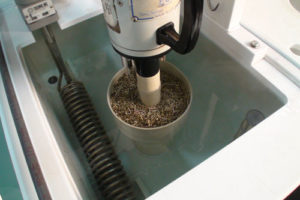
Spouted Bed Electrode Plating

Built for micro-sized parts under 1 cm with complex geometries. Ultrasonic agitation and continuous solution flow deliver uniform coverage in deep IDs.

SAM’s Technology / NanoSHIELD-AU

A self-assembled molecule treatment applied after gold plating. It improves corrosion and diffusion resistance and allows thinner gold.

Steriplate®

Our proprietary process for medical device components. Read the process overview to see how it performs in medical applications.


Electro-Spec’s Electroplating Capabilities

Compare finishes, substrates, methods, testing, and certifications for our Indiana and South Carolina facilities.

Finishes
Indiana

Gold
Silver
Nickel
Electroless Nickel
White Bronze (Tri-M3)
Copper
Passivation

South Carolina

Gold
Nickel
Electroless Nickel
White Bronze (Tri-M3)
Copper
Matte Tin
Bright Tin
Passivation

Substrates
Indiana

BeCu
Brass
Phosphorous Bronze
TeCu
Copper
Carbon Steel
Leaded Steel
Stainless Steel
Kovar
Invar
Nickel
Spring Steel
Molybdenum
Elkonite
Alloy 42
Inconel

South Carolina

BeCu
Brass
Phosphorous Bronze
TeCu
Copper
Carbon Steel
Leaded Steel
Stainless Steel
Kovar
Invar
Nickel
Spring Steel
Molybdenum
Elkonite
Alloy 42
Inconel
Zinc Diecast

Plating Characteristics
Indiana

High Reliability
Safety Critical
Life Altering
Life Saving
Abrasion Resistant
Chemical Resistant
Corrosion Resistant
EMI/RFI Shielding
Impact Resistance
Lubrication
Protective
Temperature Resistant
Wear Resistant

South Carolina

High Reliability
Safety Critical
Life Altering
Life Saving
Abrasion Resistant
Chemical Resistant
Corrosion Resistant
EMI/RFI Shielding
Impact Resistance
Lubrication
Protective
Temperature Resistant
Wear Resistant

Processes
Indiana

Electroplating
Electroless
Cleaning
Heat Treating
Annealing
Vacuum Vapor Degreasing
Bright Dipping
Electropolishing
Passivation

South Carolina

Electroplating
Electroless
Cleaning
Heat Treating
Annealing
Vacuum Vapor Degreasing
Bright Dipping

Methods
Indiana

Barrel
Rack
Wire
Vibratory
Selective (Gold)
SBE (Spouted Bed Electrode)

South Carolina

Barrel
Rack
Wire
Vibratory
High Speed Rack Plating (Nickel)

Sizes
Plating Thickness - Indiana

5 to 500 µ”

Plating Thickness - South Carolina

5 to 500 µ”

Part Width/Size - Indiana

Up to 12″

Part Width/Size - South Carolina

Up to 12″

Production
Volume/Capacity - Indiana

1 to 10,000,000 pcs
Prototype to large volume

Volume/Capacity - South Carolina

1 to 10,000,000 pcs
Prototype to large volume

Typical Lead Times - Indiana

3 to 5 days
Kanban/Inventory Management

Typical Lead Times - South Carolina

3 to 5 days
Kanban/Inventory Management

Quality
Inspection/Testing Capabilities - Indiana

Microscope (Visual up to 500x)
Plug/Ring Gages
X-Ray Fluorescence
Cross Sectioning
Hardness
Solderability
Nitric Vapor
Sweat
Bake
Adhesion
Purity
Steam Age
Ammonium Sulfide
Copper Sulfate
Potassium Hydroxide
Heat Quench
ICP (Inductively Coupled Plasma)
Scanning Electron Microscopy
Energy Dispersive Spectroscopy

Inspection/Testing Capabilities - South Carolina

Microscope (Visual up to 500x)
Plug/Ring Gages
X-Ray Fluorescence

Solderability
Nitric Vapor
Sweat
Bake
Adhesion
Purity

Ammonium Sulfide
Copper Sulfate
Potassium Hydroxide
Heat Quench
ICP (Inductively Coupled Plasma)
Scanning Electron Microscopy

Quality Control - Indiana

Statistical Process Cycle
Traceability
PFMEA
PPAP
Control Plans
APQP
8D
Process Validations
Lean Six Sigma
Certificates of Conformance
Failure/Metallurgical Analysis

Quality Control - South Carolina

Statistical Process Cycle
Traceability
PFMEA
PPAP
Control Plans
APQP
8D
Process Validations
Lean Six Sigma
Certificates of Conformance
Failure/Metallurgical Analysis

Industry Focus
Indiana

Aerospace
Medical
Telecommunication
Military
Battery
Automotive
Nuclear
Alternative Energy

South Carolina

Aerospace
Medical
Telecommunication
Military
Battery
Automotive
Nuclear
Alternative Energy

Certifications
Indiana

ISO 9001
AS 9100
ISO 14001
ISO 13485
NADCAP
Lockheed
Raytheon
Honeywell

South Carolina

ISO 9001
AS 9100
10 CFR Part 50 (Nuclear)

Industry Standards
Indiana

ASTM
Mil-Spec
AMS
RoHS
EEIC
REACH
Conflict Minerals

South Carolina

ASTM
Mil-Spec
AMS
RoHS
EEIC
REACH
Conflict Minerals


Electroplating Services: Frequently Asked Questions

What are common electroplating problems?

The most common problems are poor coverage in deep IDs and complex geometries, adhesion failures caused by incoming part condition, and specifications that conflict with how plating behaves. Most are preventable with the right process, incoming inspection, and an early review of the spec. Our guide to the most common plating problems and how to solve them covers each one.

How long does electroplating typically last?

There is no single lifespan, because plating life depends on the finish, thickness, base material, and the environment the part sees in service. Wear, corrosion, and oxidation are the main causes of failure, so matching the finish and thickness to those conditions extends life. Tell our engineers about your operating environment and we will recommend a finish for the service life you need.

How does electroplating affect solderability?

Plating gives solder a clean, oxide-free surface to bond to. A nickel underplate with a thin gold flash of roughly 5 to 20 microinches is the standard system, and much thicker gold can cause brittle solder joints. Our guide on how electroplating enhances solderability explains how to spec it correctly.

How can I ensure my parts meet exact specifications on the first run?

Start by reviewing the spec with our technical team before production, so coverage, thickness, and cosmetic requirements are realistic for your part geometry. We inspect incoming parts, run the job under documented process controls, and test properties such as adhesion and thickness in-house before shipment. Prototype quantities and process validations are available for new or difficult requirements.

Can you help me resolve recurring quality issues with my current plating supplier?

Yes, many customers come to us after recurring problems such as poor coverage in small IDs, peeling, blistering, or staining. Our metallurgical lab performs failure and root cause analysis, and we work with your engineers to correct the cause, whether it is the process, the specification, or the incoming part.

What technologies do you have to ensure traceability and prevent fallout or rejects?

Our PLC-controlled automated lines capture process data, and statistical process control, lot traceability, and archived job records let us review how a part was run years later. Vacuum vapor degreasing and in-house testing, including X-ray fluorescence, cross-sectioning, and scanning electron microscopy, catch problems before parts ship. Our quality system includes PFMEA, PPAP, control plans, APQP, and 8D.

How quickly can you provide testing data and certifications for my parts?

Certificates of conformance and packing lists can be downloaded from the Customer Portal for each order. Typical plating lead times are 3 to 5 days, and inspection and testing are performed in-house.

What collaborative measures do you use to adjust processes for difficult specifications?

We review the functional requirement behind the spec with your engineers and separate critical performance needs from cosmetic preferences. When geometry or coverage is the barrier, we can change the method, such as moving a part to spouted bed electrode plating or electroless nickel, and validate the change with test data. Early consultation, before parts are in production, leaves the most room to solve the problem.